
New Research Exposes Military Emissions as a Major Blind Spot in Global Climate Policy
We are proud to announce the official release of a groundbreaking new systematic review that uncovers one of the most critical, yet overlooked, contributors to global environmental degradation.
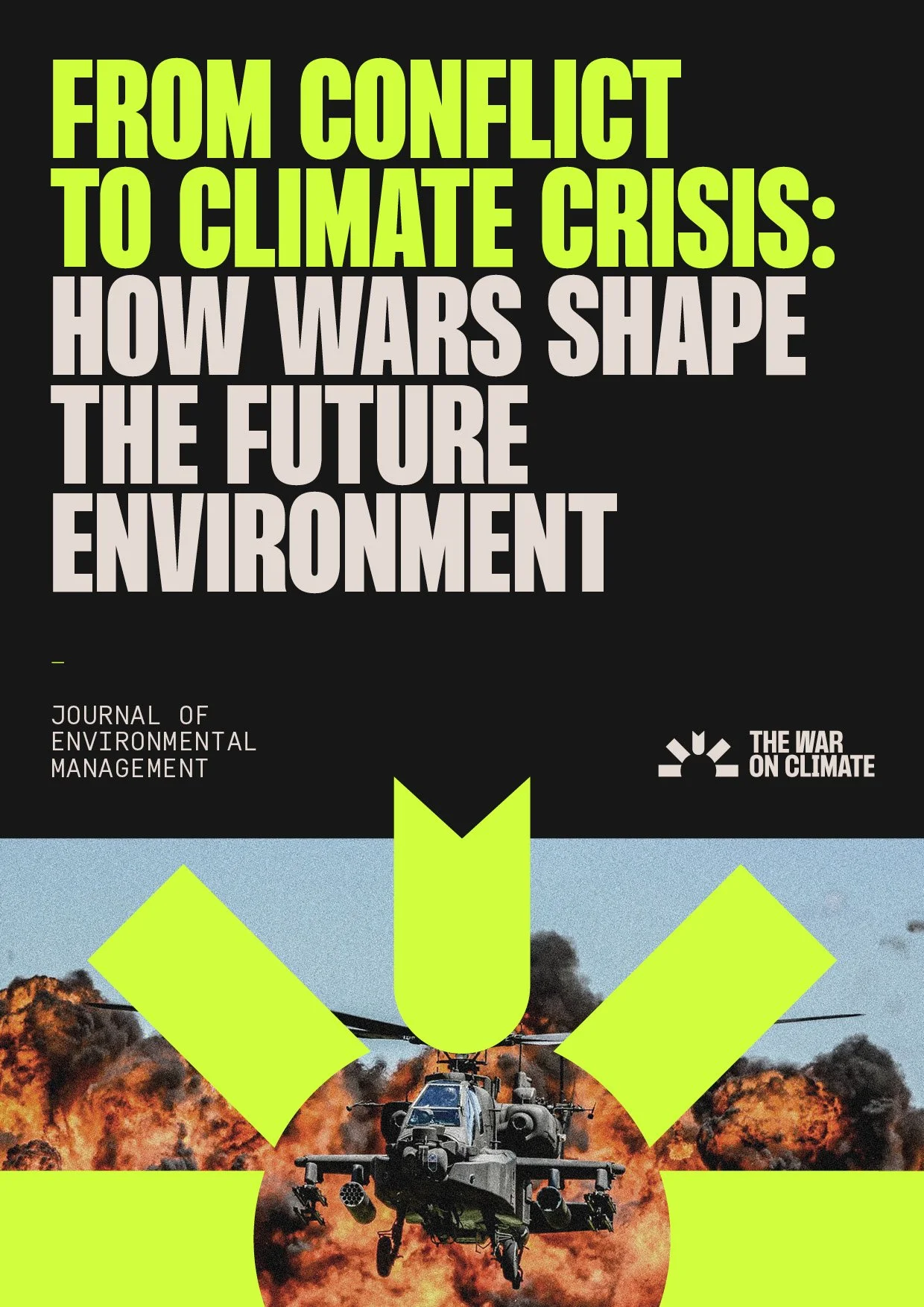
Co-authored by Dr. Soroush Abolfathi and a team of leading experts, From Conflict to Climate Crisis: How Wars Shape the Future Environment sheds a much-needed light on a massive blind spot in global climate policy: the military footprint.
For decades, the environmental toll of warfare has been underreported and neglected in climate discussions. This comprehensive study collects evidence from 263 peer-reviewed studies and 36 major reports published between 2014 and 2025.
Following the rigorous PRISMA framework, the authors examine environmental impacts across all phases of warfare—pre-conflict, active conflict, and post-conflict—focusing on four vital domains: greenhouse gas (GHG) emissions, water systems, agricultural land/food security, and natural ecosystems.
Its findings are impossible to ignore.
The study estimates that military operations contribute roughly 5.5% of total global greenhouse gas emissions. If the world’s militaries were collectively counted as a nation, their carbon footprint would make them the fourth-largest emitter on the planet.
Because of voluntary disclosure rules and current international policy frameworks, the reporting submitted to the United Nations Framework Convention on Climate Change (UNFCCC) covers less than 10% of actual military emissions.
Carbon footprints extend far beyond battlefield explosions. The review identifies extensive hidden emissions rooted in pre-conflict mobilization, weapons manufacturing, global supply chains, refugee displacement, and the massive undertaking of post-conflict reconstruction.
Beyond warming the atmosphere, these compounding processes degrade water and soil systems, disrupt vital natural ecosystems, and systematically undermine global food security.
By bridging fragmented evidence across different environmental sectors and conflict timelines, this review clarifies the complex "conflict-climate nexus" and exposes the structural flaws in our current global climate governance.
Perhaps most importantly, the paper identifies a fundamental contradiction at the heart of global climate policy: How can the world meaningfully pursue the goals of the Paris Agreement while excluding one of the planet’s largest and least transparent sources of emissions?
For too long, military activity has existed in a political and environmental blind spot. This paper makes clear that any serious conversation about climate accountability must include war, militarisation, and the true environmental cost of conflict.
The study calls for three areas of immediate action:
Mandatory and transparent military emissions reporting
Standardised global accounting frameworks
Integration of military impacts into climate governance and policy
Without this, the authors argue, any vision of a sustainable future remains incomplete.
The message of the paper is clear: There is an urgent, undeniable need for mandatory, transparent, and standardized military emission reporting.
As we continue our mission at The War on Climate, this paper serves as an essential tool and a call to action. Incorporating military accountability into global climate policy is vital to safeguarding the future of our planet.
Without addressing this blind spot, any vision of a sustainable, peaceful, and climate-resilient future remains fundamentally incomplete.